Construction has, for most of its modern history, depended on a simple model: source materials, build structure, tear down. Perhaps this linear process would have continued, but for the need to clear more and more land at greater cost and the growing understanding that a building is, in fact, a store of materials, with all the emissions that come from production. Now a new generation of project managers and the broader commercial markets they serve are discovering that the circular way isn’t just the right way – it’s the way that’s about to make a whole lot more money. Learn how smart salvage is taking off!
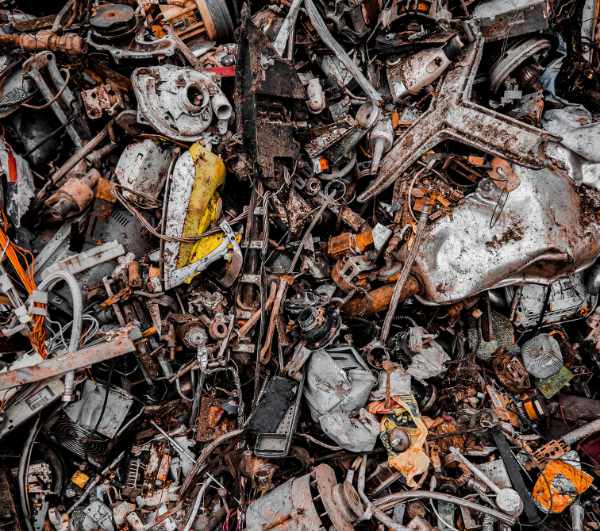
The Financial Case for Smart Salvage
Project managers who have compared the costs know that landfill tipping fees are not insignificant numbers to ignore. In some areas and for certain material types, tipping fees can be steep enough to penalize sloppy site management. The more tonnes that can be diverted – either because they are sold or recycled, or because they are repurposed in the project – the less landfill costs will cut into the job’s margins.
What is less obvious but equally real is the revenue that salvage can generate. High-value scrap materials – most notably those in the non-ferrous family (copper, brass, aluminum) – command strong prices on the recycling market. Ferrous scrap, like steel, is much bulkier but also accumulates fast, particularly on a major renovation. Architectural salvage comprises a third group: here, the secondary markets for reclaimed timber, heritage brick, period-appropriate fixtures, or cast-iron components are prepared to pay top dollar for material with character and history.
Taken together, the savings and secondary income from a well-run, smart salvage operation on a medium-scale commercial renovation can reduce a significant percentage of site costs. Most of the good operators are now aware of these numbers.
Deconstruction as a Specialized Discipline
There’s a major difference in how fast a building can be removed compared to how carefully it can be taken apart one component at a time. What’s more, that distinction affects what can be done with the materials once they’re loose. Each regime has a place – complex future sites where it might take 50 years before anything worthwhile gets built are ideal candidates for full-scale demolition; a 100-year-old factory or warehouse should be at least partially deconstructed to keep the most valuable components out of landfill. But every project exists somewhere on the gradient between the two.
Optimizing Metal Recovery
Metals are the lowest hanging fruit for any salvage effort. Ferrous and non-ferrous metal, from structural steel to copper pipe to brass fittings to aluminum window framing, can be melted back down again in a repeating cycle of production. Nothing gets lost in that process, and the quality of the metal isn’t degraded. A six-inch copper pipe that is recycled today ultimately produces copper of equivalent quality to a six-inch pipe of virgin ore. That reality underpins metal’s role as the cornerstone of any successful, smart salvage program.
On a renovation job, metal opportunities are abundant: the electrical wiring, the copper plumbing, the steel structural beams, the lead jointed cast iron pipe, the galvanized steel floors and cladding and roof, the electrical conduit, and countless ancillary pieces of hardware. Not a scrap of it must go to waste, and there’s a ready and waiting market for each form of metal salvage.
The challenge is physical separation. Non-ferrous must not be mixed with ferrous, as the amalgamated material is then worth the least in a sale. Magnetic separation can be employed on site, but the cleaner and more efficient approach is while the material is being removed. This requires a savvy team of deconstructionists.
Related: The Hidden Weight of Construction Waste and Why It Matters
Managing the Logistics of Onsite Sorting
Redevelopment of urban areas is often situated in confined spaces. Waste management infrastructure costs time and money, two things in short supply in construction. Mobility constraints also limit the capacity to stockpile material unless you’re going to regularize truck movements in and out of the site.
Good site managers establish sorting at source right from the outset in the form of dedicated sorting zones within the site limits. These could be physical areas with room to lay down a small stockpile of ferrous and non-ferrous metals, clean timber, masonry, and then a separate general waste pile. Or it could be as simple as designating different colored skips. Or bays within which to put material that has been marked in some way. The discipline of sorting at source is a whole lot less effort than having to hand sort a mixed pile – and you do a better separation.
An early focus on waste is facilitated by a Waste Management Plan (WMP). Increasingly, municipal councils require a WMP to be filed with the permit application – and then implemented if the permit is granted. A WMP compels developers and their contractors to think through waste recycling at the planning stage rather than leaving it as an afterthought once the main contractors are appointed. A good WMP will identify each material stream that will be generated by the project – items on a typical list include vegetation, concrete, steel, copper, aluminum, clean timber, mixed timber, gypsum board, and general waste – set targets for diversion from landfill, and indicate the recovery facility that has been contracted to take that material stream.
Sourcing Local Recovery Partners
No salvage strategy works without reliable downstream partners. A construction site isn’t a recycling facility – its job is to generate sorted, separated material and move it off-site as quickly as possible to keep the project timeline moving. That means the relationships with regional processors, architectural salvage dealers, and metal recyclers need to be established before the work starts, not during it.
For metal recovery specifically, local specialists are the practical choice. They know local material grades, they move quickly, and they handle the weighing and documentation that feeds into project reporting. Working with established scrap metal collectors Sydney allows project managers to coordinate scheduled pickups around site activity, avoid material buildup that creates safety and access issues, and ensure that the revenue from scrap metal is actually captured rather than left sitting in a skip until it gets contaminated and loses value.
The same logic applies to other material streams. A local architectural salvage firm that takes reclaimed timber and heritage fittings, a concrete crusher that processes masonry onsite or nearby – the closer these partners are, the lower the transport emissions and the faster the turnaround. These are all examples of smart salvage.
Reducing Embodied Carbon through Localized Supply Chains
Salvaged materials directly offset embodied carbon. A reclaimed steel beam doesn’t require smelting. A reclaimed timber joist doesn’t require logging, milling, and kiln drying. Every tonne of material recovered from a renovation site and reintroduced into a new project is a tonne that didn’t trigger a new manufacturing cycle.
Scope 3 emissions – indirect emissions in a company’s supply chain – are increasingly scrutinized by developers with sustainability commitments and corporate clients with net-zero targets. Using salvaged materials, particularly those sourced locally, produces measurable reductions in Scope 3 that feed directly into carbon accounting reports.
Verifying Salvaged Materials for Structural Reuse
One of the true barriers to the greater application of salvaged structural materials is a justifiable lack of faith. That reclaimed steel beam or salvaged timber post may look fine, but simply trusting to luck and the naked eye isn’t enough where building codes are concerned.
Engineers have adopted established protocols for this, too. Steel is tested by ultrasonic thickness measurement, and its welds and connections are visually inspected. Reclaimed structural timber is graded according to the current applicable standards, and its moisture content, notching, and biological degradation are examined. If the material passes the tests, it can be specified and certified in exactly the same way as new material – often at less cost and with a superior carbon story.
All of this does add time and cost to the process, however, which is why it seems safe to argue that salvage-for-reuse works better when it’s anticipated and incorporated into the overall project schedule from the start as a tested assumption, rather than left as a time-wasting, possibly false-hope-raising Hail Mary late-stage option.
Digital Material Passports and the Future of the Material Bank
The construction industry is starting to use BIM (Building Information Modeling) and in some cases RFID tagging to track materials from their earliest stages of design right through to their refurbishment or reuse in another building. This can help facilitate better, faster, and cheaper salvage by providing detailed information on how all parts of a building fit together and which materials will be in greatest demand. This, in turn, will generate useful new datasets for understanding the secondhand value of manageable waste.
Similarly, the more different kinds of material that can be collected together, the likelier at least some of it is to find a home. High-performance steel from a particular kind of building may be in demand for new construction and circular economy design concepts could facilitate connecting brownfield developers with material manufacturing demands. Many construction and demolition firms are already taking forward-looking circular economy approaches, such as planning for design changes that will drive future demand for the material being decommissioned.
The Regulatory and Marketing Dividend
Green building rating systems such as LEED or Green Star provide points for managing construction and demolition waste. High landfill diversion rates are not just operationally positive – they are measurable credentials that affect certification scores, financing terms, and marketability.
Commercial tenants that are eco-conscious are a real market segment. Developers can show concrete numbers on diversion percentage, use of salvaged materials, and even report reductions in embodied carbon. They are not vaguely sustainable. They are concretely sustainable in targeted areas relevant for attracting quality tenants, satisfying planning conditions or loan covenants related to environmental performance, or accessing green loan products that require the establishment of environmental performance benchmarks.
Smart salvage, well run, does not fudge numbers – it generates the best possible numbers naturally. The diversion records exist in the WMP documentation. The carbon savings exist in the material sourcing records. The financial performance exists in the project accounts. None of it requires extra effort to document if the operational systems are in place from the start.
The first step in any of this is getting salvage and reuse principles right in the operations of a renovation or retrofit. Most important: teams will not get the full benefit until they stop treating renovation projects as construction exercises and start treating them first and foremost as materials recovery exercises.