As you decide what upgrades to make to your home, aesthetics is only part of the equation. While a nice-looking home certainly sells faster and for more, you have other considerations as you choose which home improvements to make, including energy efficiency. Keep in mind that you increase the value of your home even more and can entice more potential buyers when you improve your home’s efficiency and curb appeal simultaneously. In this piece, we’re looking at EIFS vs stucco when it comes to installation, lifespan, and more. Let’s begin!
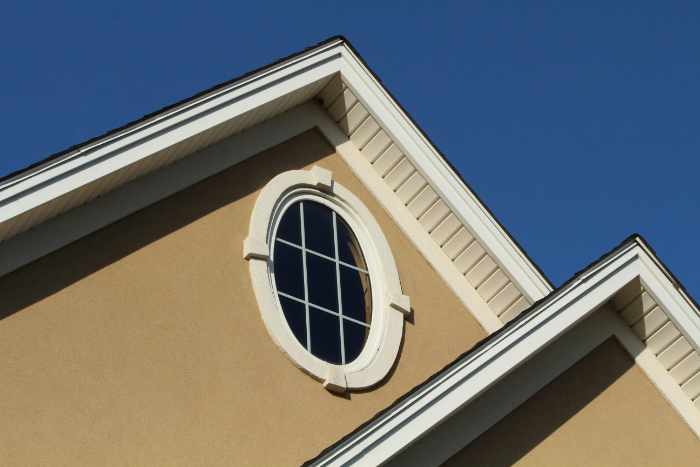
EIFS vs Stucco
So, which exterior finish adds more value — a stucco or an EIFS installation? Both are long-lasting and visually appealing, but both require different maintenance and have unique benefits that can affect your home’s value.
Brief Overview of Stucco
Stucco consists of a mixture of sand, lime, cement, and water placed over wire mesh. After it’s given time to cure, it becomes hard and durable while also giving the outside of the home a timeless appearance. It’s proven its worth, as it’s been used on homes for centuries.
Once it’s applied, especially when done properly, it lasts 50 to 80 years on average. This is particularly the case when you maintain it properly and live in an area where excessive moisture isn’t a concern. Besides its durability, stucco sticks out as a low-maintenance siding with a classic appearance. It’s also resistant to fire.
While you can benefit from stucco, you should know that it can develop cracks as your home settles or the temperature changes from season to season. Any cracks must be repaired promptly to avoid moisture from entering through the crack.
If you live in a damp climate, the moisture can cause your stucco siding to fail prematurely because of the excessive freeze-thaw cycles. In terms of energy efficiency, stucco doesn’t provide much insulation. How well insulated your home is will largely rely on the insulation inside your walls.
Brief Overview of EIFS
EIFS stands for exterior insulation and finish system. Rather than one solid layer of a cement mixture, an EIFS is a multi-layer system that not only provides an aesthetically pleasing exterior, but it also has insulation. Typically, it consists of a water-resistant barrier and then an insulation board. It has reinforced mesh and a base coat on top of that. The outside portion is a decorative finish.
Although there are some variations with stucco, EIFS has more options for finishes, including ones that look similar to stucco, stone, or brick.
Why the Energy Efficiency of EIFS Installation Makes a Difference
When considering EIFS vs stucco for your home, compare their insulation differences. For one, insulation helps to reduce the next owner’s energy expenses, which is a valuable addition considering how expensive heating and cooling costs can be.
Specifically, the insulation minimizes thermal bridging, which is when heat enters through the framing and wall studs. While this doesn’t sound like much, it can reduce heat loss during winter and decrease how much heat enters in the summer. Overall, the indoor temperature stays more consistent, and you need less heat or air conditioning to maintain comfort.
Not to mention, you’re reducing the strain on your HVAC system or window air conditioner, which can potentially increase its lifespan and reduce repair costs.
Ultimately, these advantages will make the house more appealing to prospective buyers in the future. Although this seems like quite an investment to make for energy efficiency, over time, you can reap the reward. And any buyers will receive the perks from the beginning.
Understand the Curb Appeal Comparison
Whether you’re planning to sell your home soon or simply want to enjoy a beautiful exterior, curb appeal plays a major role in your home’s value. Either stucco or EIFS installation can provide your home with a beautiful exterior that you can enjoy while you’re there or that will be more appealing to any prospective buyers.
However, when truly comparing the two, one obvious win for EIFS vs stucco comes from EIFS’s ability to have multiple finish styles. There is more flexibility when it comes to the finish, texture, trim accents, and architectural details. You can even opt for a stone-like appearance, multiple colors, or additional trim accents.
Overall, EIFS is a lighter material, so it’s easier for a siding company to shape. It allows the team to create more intricate architectural details that’ll make your home stand out from the rest on the block. It’s also a more cost-efficient option if you’re choosing a more elaborate design.
That being said, you can still opt for Mediterranean, Southwestern, contemporary, and Spanish finishes with stucco. And you can even request decorative features, but they’re often more labor-intensive and will cost you more.
What to Know About Moisture Management with These Exterior Finishes
Original EIFS had moisture issues that varied based on the age of the system. For instance, initially, it didn’t have a drainage path. Therefore, if water somehow got behind the system through cracks, bad flashing, or window leaks, it became trapped and could lead to several problems, such as wood rot, structural damage, or mold growth.
However, over time, moisture management with EIFS has improved drastically with drainage systems that direct moisture away from the walls, minimizing the likelihood of water becoming trapped, especially if it’s installed properly.
Stucco requires careful installation to prevent issues from cracks, damaged flashing, or improperly sealed penetrations that let water get in behind it.
Traditional stucco also requires proper moisture management. Cracks, improperly sealed penetrations, or damaged flashing can allow water to enter behind the stucco, potentially causing damage if left unaddressed.
Related: Is Vinyl Siding a Good Investment for Louisville Homeowners?
Maintenance
Either system can last for many decades, but this is especially the case with EIFS. It’s more flexible as a result of its layered construction. As a result, it can better accommodate foundation shifting.
Both require maintenance. For stucco, you’ll need to inspect for cracks regularly and make any necessary repairs as soon as possible. It’ll need to be repainted or refinished periodically so it retains its appearance. You’ll also need to wash away any dirt that accumulates.
For EIFS, you’ll need to inspect the sealants around your doors and windows. It requires you to clean it as you notice dirt building up. You’ll also want to repair any damage you notice promptly. You may need to hire a professional for inspections as recommended.
Conclusion
EIFS vs stucco is a common competition in many parts of the country. Both solid options if you’re looking for an exterior finish that can improve the appearance of your home and even its value. Stucco has its share of benefits, but EIFS has more when it comes to your home’s value.