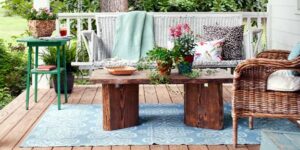
The most common error people commit regarding their outdoor areas is considering them unimportant, simply placing a couple of chairs outside, and considering it complete. A functional outdoor living room shares the same construction concept as any indoor area: You must have a well-established footprint, a specific purpose, and furniture that can withstand the elements. Once you accomplish these three aspects, this space will no longer be just a patio, but an extension of your home.

5 Design Principles for Creating a Functional Outdoor Living Room
If you follow these design principles, it will make creating your functional outdoor living room much simpler, and your neighbors will wonder if you hired a professional.
1. Choose Materials For Your Actual Climate
When it comes to outdoor furniture, aesthetics are important, but durability is key. This is a classic mistake that leads people to replace their outdoor set every few seasons.
Why? What looks pretty in a catalog might not withstand your backyard, and if it’s comfortable, you’ll want to use it, right? So you want to choose furniture based not only on how it looks but also on how it feels and functions with the local climate conditions.
Powder-coated aluminum doesn’t rust and remains relatively light so it’s great in humid or coastal conditions. Wrought iron is great in windy areas because it’s so heavy. Teak and other very dense hardwoods can handle a lot of moisture, but will need some upkeep. And performance fabrics, especially solution-dyed acrylic, will resist UV fading far better than standard outdoor fabrics.
The other part of the equation is that the quality of the piece may matter as much or more than the material. Madbury Road is a good source for quality, great-looking, comfortable outdoor furniture that’s built to resist the weather. They cut no corners in construction, and they source the fabrics from a company that stands by their lifetime guarantee.
2. Find One Anchor
Decide on the primary function of the space before you make a purchase of a single piece of furniture. Not “relaxing and dining and entertaining” – you choose one. This anchor point decides everything else around it.
If it’s a conversation, it should be first, then the sectional or lounge grouping. If it’s the dining table, those are the anchor points around which everything else revolves. Every other element arranges itself around that decision. Spaces that try to do too much without a clear hierarchy end up feeling cluttered and never quite usable for any single purpose.
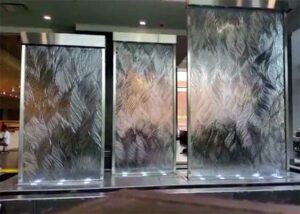
A fire pit is a great focal point because everyone comes toward it, and it faces the seating, making the orientation obvious. A water feature can do the same thing, as can an outdoor TV. The point is, you’re not decorating, you’re lining up views and traffic.
Related: Outdoor Man Caves Are a New Thing, Right?
3. Make It Match
An outdoor room that looks nothing like the inside of the house is a missed opportunity. The floor level, color palette, and general material tone of your exterior space should carry visual continuity from your interior living room.
Not matchy-matchy. Just an outside color that feels as though it belongs on the same planet as the inside colors. If your interior runs warm neutrals with natural wood, the outdoor space shouldn’t be all-white modern steel. The visual connection makes both spaces feel larger. It’s one of the few design moves that adds perceived square footage without construction.
Traffic flow matters here, too. A clear path of at least 36 inches between furniture pieces keeps the space from feeling blocked. In order for it to be a functional outdoor living room, people need to move through it naturally, the same way they would through an indoor living room.
4. Build Vertical Interest
This is often the missing piece when creating a functional outdoor living room. Because without a ceiling, a cluster of furniture in an open yard is simply furniture in a yard. It’s the vertical elements that turn it into a room.
Pergolas are the most structural and most effective; they clearly define overhead space without completely closing it off. Umbrellas work for smaller footprints. Hanging plants and string lights can achieve the same feel at a fraction of the cost. The point is to create a boundary overhead that says, “this is an enclosed space” to anyone sitting in it.
Privacy screening along the perimeter, lattices, tall planters, and dense greenery reinforce the enclosure on the sides. That sense of containment is what makes a space feel intimate rather than exposed.
5. Layer the Lighting
Good outdoor lighting is important because it ensures that you can see everything clearly. But great outdoor lighting can do so much more. It can make the difference between a space you use after dark and one designed only for daylight hours.
That’s why good outdoor lighting design includes several different types of illumination, known as layers, that work together to create a cohesive whole.
Task lighting is the brightest. It’s for the specific jobs, the things you need to do, the areas you need to use. Cooking on a grill or outdoor kitchen needs light. Ambient lighting, such as festoon lights, candles, or even low-cost solar lanterns, is the next layer. This is for when you’re relaxing in your space and don’t need the intensity of task lighting for a specific job.
This lighting helps define the space. It creates a “room,” a sense of place. It shows you where the edges of your outdoor living area are and what you’re meant to be doing within them. Plants, statuary, and even falling water can all be lit this way. These are your “show” elements. Put them last for the best effect and adjust accordingly. The housing of the light is as important as the light itself, particularly with garden lighting, where it will be visible by day.
The Return on Discipline
None of this is particularly tricky, but it does require treating your outdoor space with the same intentionality you’d apply to any room in your house. Define its purpose, solidify the layout, carry your interior material palette outside, build vertically, choose finishes that last in your climate, and shed some well-designed light on the subject.